Restoring Nature in the Heart of Chennai
The Taramani Urban Forest Story
Three years ago, the 2.3-acre railway land in Taramani, Chennai, stood as a stark reminder of rapid urban neglect. What should have been open public land had gradually turned into an informal dumping yard filled with garbage, civil debris. During the monsoon season, the entire stretch became heavily waterlogged, creating stagnant pools that attracted mosquitoes and emitted foul Odors. Invasive Seemai Karuvelam (Prosopis juliflora) shrubs dominated the landscape, suppressing native vegetation and further weakening the ecological balance. The space was not only environmentally degraded but also socially disconnected—avoided by residents and perceived as unsafe. It was clear that the land needed not just cleaning, but complete ecological restoration.
2023 April
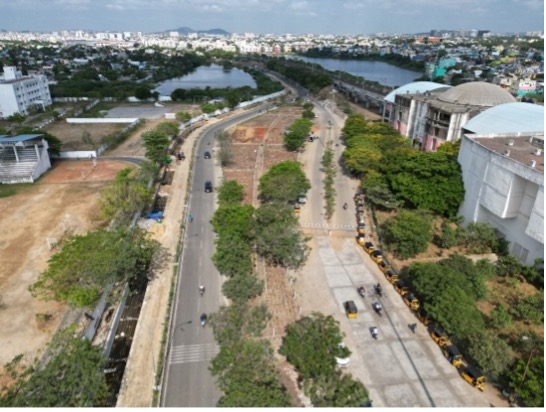
2025 Dec
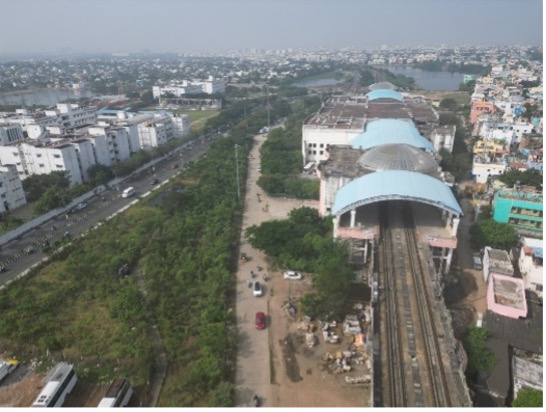
Recognizing this opportunity, Thuvakkam, in collaboration with Southern Railway and the Greater Chennai Corporation, envisioned transforming this neglected railway land into a dense native forest using the Miyawaki afforestation method. The initiative was strengthened by CSR partnerships from Ford Motor Company, RRD, Altimetric, Genesys, TAG, and AstraZeneca. The first phase involved the removal of over 700+ tonnes of accumulated waste, followed by soil testing, land levelling, desilting of stagnant water areas, and the installation of protective fencing. Organic inputs such as vermicompost and mulching materials were added to revive soil fertility. Only after restoring the land’s basic health did the plantation begin, with 22,813 native saplings of more than 70+ species carefully planted across the 2.3 acres.
What followed was not just growth, but regeneration. With structured Two-year maintenance involving regular watering, weeding, pruning, drainage management, and continuous monitoring, the saplings began to establish strong root systems. Soil assessments conducted over time showed remarkable improvements—pH levels moved toward near-neutral conditions, organic carbon content increased, and macronutrients like nitrogen, phosphorus, and potassium multiplied significantly. Micronutrients such as iron, zinc, copper, and manganese also showed substantial enrichment, indicating active biological processes and improved soil vitality. Air quality monitoring further revealed that particulate matter levels (PM2.5 and PM10) consistently remained within the “good” category, demonstrating the forest’s contribution to pollution reduction and microclimate stabilization in a densely urbanized setting.
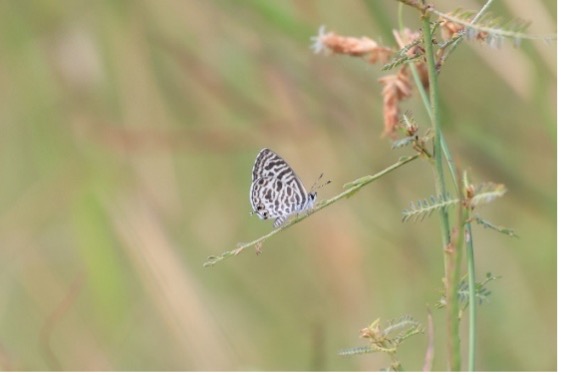
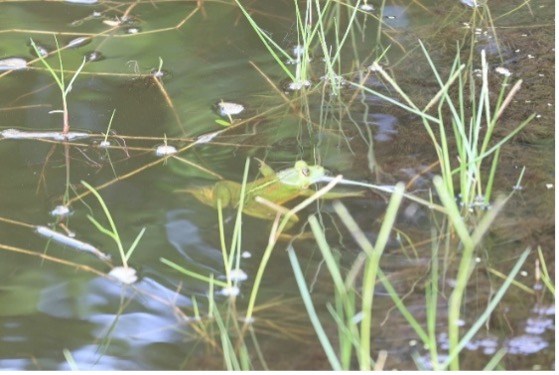
The ecological revival soon attracted life back into the area. Biodiversity mapping documented over 44 species of fauna1, including birds, butterflies, dragonflies, spiders, reptiles, and aquatic organisms supported by the restored pond ecosystem. Natural regeneration of medicinal and native plant species signalled that the ecosystem was becoming self-sustaining. Birds facilitated seed dispersal, new saplings began sprouting naturally, and aquatic vegetation developed due to improved water retention and habitat diversity. The once-barren land evolved into a functioning ecological corridor supporting both terrestrial and aquatic life.
Zebra Blue
Genus Phrynoderma
Beyond environmental restoration, the project sparked significant social transformation. Between 2024 and 2025 alone, 28 engagement events were conducted, involving over 1,700 volunteers and generating more than 3,700 volunteer hours. Plantation drives, awareness programs, and clean-up campaigns fostered environmental stewardship among students, corporate employees, and local residents. More than 5,000 lives have been positively impacted through improved environmental conditions and community engagement initiatives. What was once considered an unusable dumping ground is now a recognized urban green asset—improving air quality, supporting biodiversity, generating livelihood opportunities, and restoring community pride. The Taramani Urban Forest stands today as a powerful demonstration that collaborative, science-based ecological restoration can convert degraded urban spaces into resilient ecosystems that benefit both nature and society.